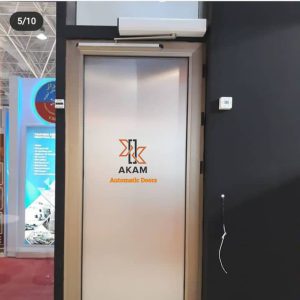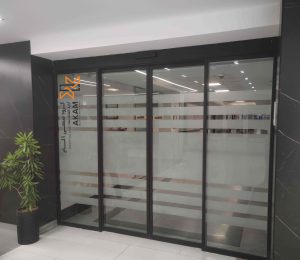
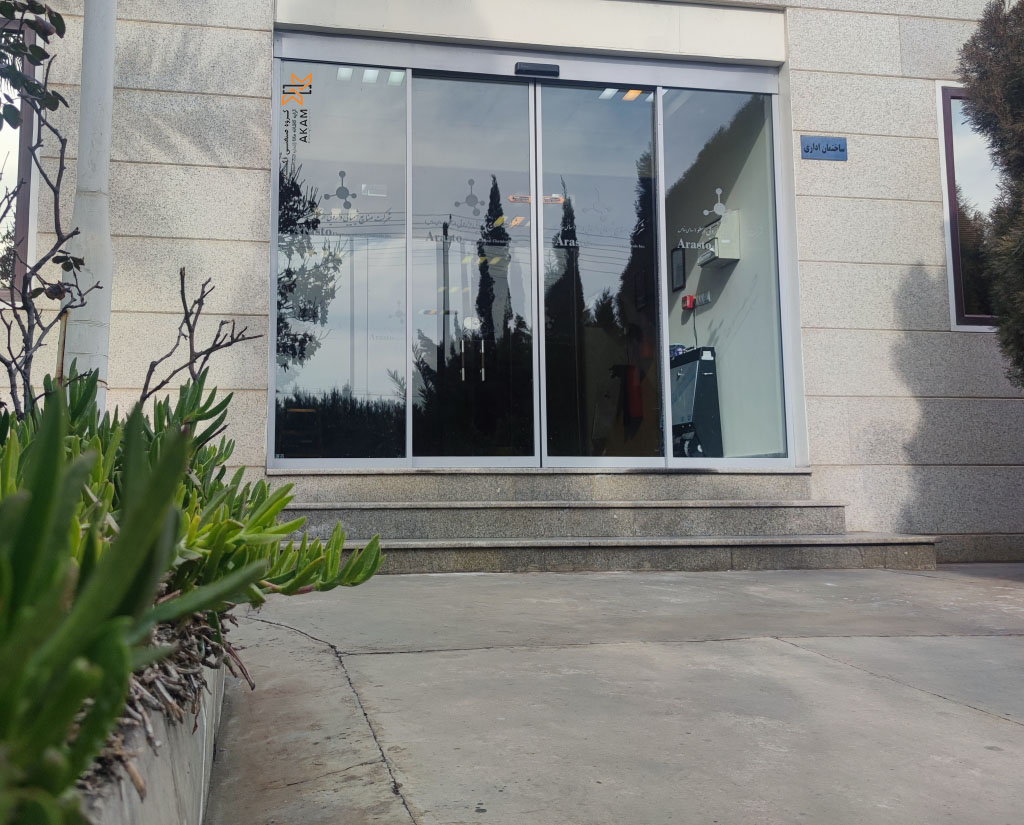
A telescopic automatic door is a type of automated door commonly used in industrial and commercial environments. These doors operate with electromechanical systems and electric motors, opening and closing automatically at high speeds. Due to their efficiency and various capabilities, telescopic automatic doors are used in storage facilities, warehouses, factories, hazardous storage units, and similar spaces. Thanks to features like enhanced security, precise control, automation, and fast operation, they significantly improve the functionality and efficiency of industrial and commercial areas.
Types of Telescopic Automatic Doors
1. Single-Layer Telescopic Door
A single-layer telescopic door is a basic automated door constructed with a single layer. When opened, it moves upward and aligns with the ceiling. This type is commonly used in industrial and commercial environments.
The single-layer door is highly favored due to its simple design and installation, ability to bear heavy loads, long lifespan, and minimal space requirement for movement. It is ideal for spaces needing quick and efficient door operation.
Typical applications include workshops, warehouses, parking lots, sheds, building entrances, and other industrial or commercial areas. Operated by electromechanical systems and electric motors, its control system is managed by sensors and pre-programmed codes for automatic operation. Its simplicity, efficiency, and cost-effective installation and maintenance make it a popular choice.
2. Double-Layer Telescopic Door
The double-layer telescopic door consists of two separate layers. When opening, the upper layer moves upward and lifts the lower layer. This type is ideal for spaces requiring adjustable open/close areas, such as workshops, sheds, and storage units.
This design allows for better control and customizable opening height, providing access to the space beneath while the upper layer remains open. It’s adjustable to meet specific spatial requirements.
Key features include:
-
Precise control in opening/closing
-
Support for heavier loads
-
Adjustable height for people and machinery
-
Option to use upper/lower layers independently
-
Thermal and acoustic insulation between layers
-
Improved security and emergency access between floors
Controlled by sensors and programmed codes, this type of door is especially useful in environments requiring flexible space management and controlled movement.
3. Triple-Layer Telescopic Door
As the name suggests, a triple-layer telescopic door has three separate layers. It is designed for environments needing precise control and higher load capacity. When opening, the top layer lifts first, followed by the middle and bottom layers moving simultaneously upward.
Unlike the double-layer version, the triple-layer model allows independent height adjustments for each layer, enabling better control and access. This improves both functionality and safety since each layer can be locked separately.
It is suitable for high-traffic areas such as workshops, warehouses, parking structures, and industrial facilities. It is also ideal for locations where machine traffic must be carefully managed or separated.
Equipped with electromechanical systems and smart controllers (sensors and coded programs), this door provides customized access and security based on operational needs.
4. Six-Layer Telescopic Door
This advanced telescopic door includes six layers, each moving upward sequentially to open the next. It is typically used in clean rooms and laboratories, where maintaining a sterile and isolated environment is critical.
Doors with more than three layers can:
-
Support the passage of large objects, vehicles, or personnel
-
Improve environmental isolation and security
-
Provide higher vertical clearance when fully opened
However, more layers also introduce engineering and installation challenges, requiring more complex control systems and precision equipment to ensure proper functionality.
Conclusion
In summary, telescopic automatic doors are widely used due to their:
-
High-speed operation
-
Enhanced control and safety
-
Aesthetic design
-
Adaptability to various environments
All types utilize electric motors and electronic systems to ensure seamless automation. This article aimed to deliver a simple yet informative overview of these doors to help you better understand their functionality. We hope you found it useful.